
Raksha Bandhan 2026 will be celebrated on Friday, 28 August 2026, across India and among Indian communities worldwide. As the day of joy approaches, now is the time to plan your celebrations — from buying rakhis and gifts to organizing family gatherings and understanding the correct Shubh Muhurat.
Across India — from bustling metros to quiet village homes — sisters will tie rakhi on their brothers’ wrists, not just as a symbol of protection, but as a timeless act of trust, laughter, and tradition.
Whether you’re planning a simple home puja or sending rakhis across continents, timing matters.
In this complete Raksha Bandhan 2026 guide by Joyful Festival, you’ll get:
✅ Exact date, tithi & muhurat (with Do’s & Don’ts)
✅ Expert tips to plan early and avoid last-minute rush
✅ Ritual insights, festival calendar, and gift prep ideas
Raksha Bandhan 2026 Date, Day & Tithi
The Raksha Bandhan 2026 date in India is confirmed as Friday, 28 August, it will fall on the full moon day (Shravana Purnima) of the Shravan month, according to the Hindu lunisolar calendar.
The alignment of Shravana Purnima on a Monday enhances the auspiciousness of the day — making it ideal for rakhi tying, family rituals, and puja ceremonies.
NOTE:
The Shravana Purnima is also significant for Upakarma and Yajurveda rituals among Brahmin communities. Rakhi should always be tied within the Shubh Muhurat, avoiding the Bhadra Kaal.
Raksha Bandhan 2026 Tithi, Shubh Muhurat & Bhadra Timings
The auspicious time to tie Rakhi is carefully chosen to avoid Bhadra Kaal and align with the sacred Shravana Purnima tithi. For Raksha Bandhan 2026, the tithi timings and Shubh Muhurat are especially favorable, with no Bhadra interfering during the ideal morning hours.
Shravana Purnima Tithi Timing
| Event | Date & Time (IST) |
|---|---|
| Purnima Tithi Begins | 27 August 2026 – 09:08 AM |
| Purnima Tithi Ends | 28 August 2026 – 09:48 AM |
Shubh Muhurat for Rakhi Tying
| Ceremony | Time (IST) |
|---|---|
| Thread Ceremony Muhurat | 05:57 AM to 09:48 AM |
| Duration | 3 Hours 51 Minutes |
Check in detail: Muhurat + Tithi
Regional Insights for Rakhi Timing
North & West India (Delhi, UP, Gujarat, Maharashtra):
Rakhi ceremonies should be completed before 09:30 AM, ideally during the golden muhurat window.South India (Tamil Nadu, Andhra, Kerala):
While traditional Rakhi is less common, symbolic rakhi-tying and Upakarma rituals may follow different local customs.NRI Families (USA, UK, Gulf, Australia, Mauritius):
If observing Indian time spiritually, align with the IST muhurat. Otherwise, perform symbolic rakhi-tying during local morning hours.
Ritual Highlights for Raksha Bandhan
Raksha Bandhan is a timeless celebration of sibling love, where tradition and emotion come together in a few powerful acts.
Here’s what most families observe during the festival:
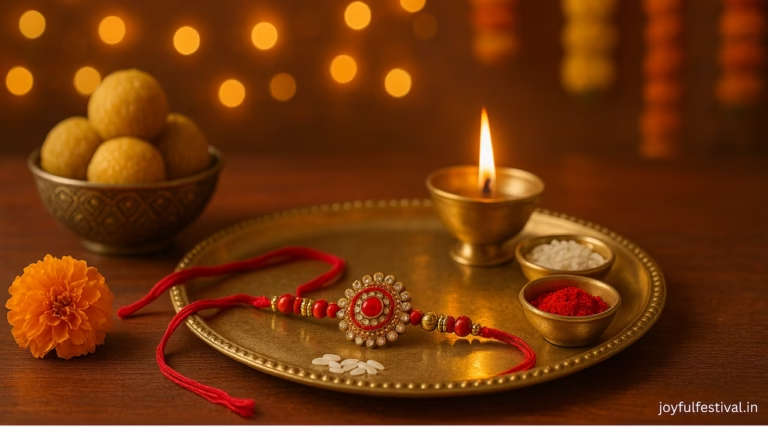
Aarti & Tilak: The sister performs a traditional aarti of her brother, circling a diya while praying for his protection and prosperity. She then applies a tilak on his forehead.
Rakhi Tying: She ties the sacred rakhi thread on his right wrist — a symbol of trust, care, and the lifelong bond.
Sweets Exchange: Sweets are offered, and laughter is shared.
Gift Offering: The brother offers a gift and blesses his sister in return.
Read about: Performing aarti and tilak is an integral cultural tradition
Why Raksha Bandhan Is Celebrated?
Raksha Bandhan isn’t just about tying a decorative thread — it’s a sacred vow rooted in age-old traditions of protection, trust, and spiritual strength. Its origins lie in powerful legends from the Mahabharata to Queen Karnavati’s call for help to Emperor Humayun. But perhaps one of the most powerful associations is with the demon king Bali
A powerful Sanskrit mantra recited during the ritual captures its deep spiritual essence:
“Yena baddho bali rājā dānavendro mahābalaḥ
Tena tvām abhi baddhnāmi rakṣe mā chala mā chala”
(I tie this rakhi, which was tied to the mighty demon king Bali, to protect you. O protector, do not falter, do not stray.)
This chant is believed to infuse the rakhi with divine protection and ancestral blessings.
👉 Curious about the deeper origin stories, cultural variations, and even the science behind Rakhi rituals?
Read the full article: Why Raksha Bandhan Is Celebrated: History, Science & Traditions
Conclusion: More Than a Thread
Raksha Bandhan isn’t just about rituals — it’s about emotional bonds, silent promises, and timeless traditions that continue to evolve with us. Whether you’re tying a simple thread or exchanging gifts across continents, what truly matters is the intention of protection and love behind it.
So this year, don’t just celebrate Rakhi — unwrap the magic of India through its layered stories, timeless customs, and heartfelt connections.
Explore more such vibrant festivals and their deeper meanings, only on Joyful Festival — your trusted guide to India’s grandest celebrations.
FAQ's
When is Raksha Bandhan in 2026?
Raksha Bandhan 2026 falls on Friday, 28 August. The Purnima Tithi begins at 9:08 AM on 27 August and ends at 9:48 AM on 28 August.
What is the best time to tie Rakhi in 2026?
The Shubh Muhurat for tying Rakhi is from 05:57 AM to 09:48 AM on 28 August 2026, avoiding the Bhadra period.
Can I tie Rakhi during Bhadra Kaal?
No. According to Hindu scriptures, Rakhi should not be tied during Bhadra Kaal, as it’s considered inauspicious.
What should I gift my sister for Raksha Bandhan?
Trending gifts in 2026 include personalized hampers, smart gadgets, ethnic jewelry, skincare kits, and spiritual decor.
Is Raksha Bandhan a public holiday in 2026?
Raksha Bandhan is not a nationwide public holiday, but some Indian states like Uttar Pradesh, Rajasthan, and Madhya Pradesh may observe it as a restricted holiday.
What if my brother is abroad on Raksha Bandhan 2026?
You can send Rakhi through courier or use digital platforms for e-Rakhis. Many services offer international Rakhi delivery with gift combos.
What’s the scientific meaning behind Raksha Bandhan?
Some view the Rakhi thread as symbolizing psychological bonds, bioenergetic exchange, and social trust mechanisms — beyond religious context. Read More on the science and traditions behind Raksha Bandhan
What rituals are followed during Raksha Bandhan?
Rituals include brother-sister Aarti, applying tilak, tying Rakhi, exchanging sweets and gifts, and seeking mutual blessings.
Which states celebrate Raksha Bandhan with unique customs?
Rajasthan (Raksha Bandhan + Lumba Rakhi), Maharashtra (Narali Purnima), and parts of Odisha/MP have distinct regional observances.
Can I tie Rakhi to someone who is not my biological brother?
Yes. Rakhi celebrates the bond of protection and trust, so many women tie it to cousins, friends, soldiers, and even divine idols like Lord Krishna.