
It’s still dark outside, around 4 AM. Across India, millions of women wake up to eat a pre-dawn meal prepared lovingly by their mothers-in-law. By sunrise, they’ll begin a day long fast- no food, no water until the moon rises that evening. This is Karwa Chauth, one of India’s most intriguing festivals that beautifully weaves together tradition, relationships, and personal devotion.
But here’s what makes it fascinating: While the ritual has remained largely unchanged for centuries, the reasons women observe it today have evolved dramatically.
Some fast for tradition, others for the challenge, many for the celebration, and quite a few simply for the special bond it creates with their mothers-in-law. Whether you’re preparing for your first Karwa Chauth, curious about the traditions, or looking for modern ways to celebrate this ancient festival, this complete guide covers everything you need to know.
Quick View: See Full Indian Festivals Calendar 2026.
What is Karwa Chauth? Understanding the Festival
Karwa Chauth is a day when married women observe a strict fast from sunrise to moonrise for the well-being and longevity of their husbands. The fast is broken only after sighting the moon and performing evening rituals.
Celebrated on Kartik Krishna Paksha Chaturthi (fourth day after full moon in Kartik month). It typically falls in October or early November.
Duration is of One day (sunrise to moonrise) observed by married women, primarily in North India. The Main Ritual is Day-long nirjala fast (without food or water)
But there’s so much more to this festival than just fasting…
The Name Decoded: Why "Karwa" Chauth?
Ever wondered what “Karwa” actually means?
It’s not just a random name! The word Karwa means Earthen pot (a traditional clay water vessel).
The festival is named after the earthen pot (karwa) which holds water and is central to the evening puja ritual. This pot symbolizes peace and prosperity – quite poetic, ‘when you think about how water sustains life, and the wife sustains the family’s happiness.’
Know more: Social Significance of Karwa Chauth
Two Stories behind the Tradition
1. The Courageous Karva
One legend features a woman named Karva, whose husband was attacked by a crocodile while bathing in a river. Karva bound the creature’s mouth with cotton yarn and appealed to Yama, the god of death, demanding her husband’s life back. Impressed by her devotion and courage, Yama granted her husband a long life.
The Lesson: The power of a wife’s determination and devotion
2. Queen Veeravati’s Mistake
A beautiful girl named Veeravati, the only sister of seven loving brothers, was married to a king. On her first Karva Chauth after marriage, she observed the fast at her parents’ house. Unable to bear seeing their sister’s hunger, her brothers created an illusion of the moon using a mirror and fire. Veeravati broke her fast, and her husband immediately fell seriously ill.
When Veeravati discovered what happened, she begged Goddess Indrani for help. Indrani revealed that breaking the fast without properly offering argha (water offering) to the real moon had caused this fate. Through a year of penance and properly observing Karwa Chauth the following year, Veeravati’s husband was restored to life.
The Lesson: The importance of patience and following rituals properly
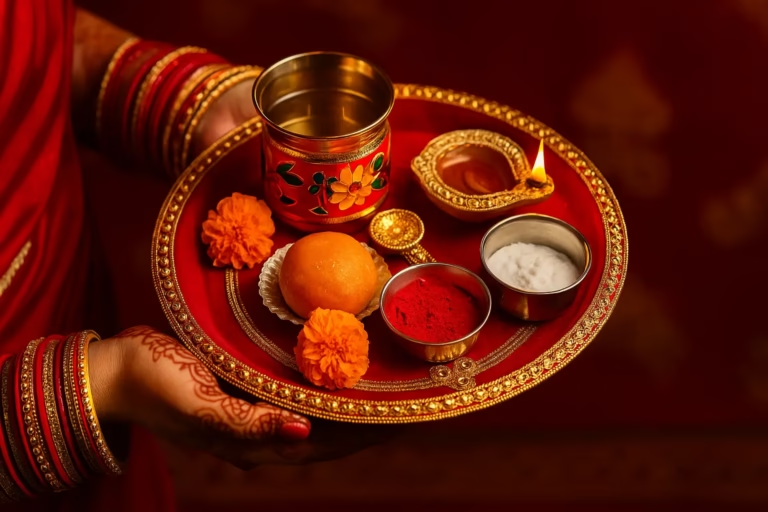
Traditional Karwa Chauth thali featuring diya, sindoor, sweets, and a decorated kalash.
The Sargi Tradition: More Than Just a Pre-Dawn Meal
One of Karwa Chauth’s most beautiful aspects is-
Sargi: It is the pre-dawn meal prepared by the mother-in-law for her daughter-in-law. Consuming Sargi before the sunrise marks the beginning of the fast and is believed to strengthen the marital bond between them and ensure the well-being of the family.
What’s in a Traditional Sargi Thali?
It consists Energy-Boosting Foods such as-
- Pheni or meethi seviyan (sweet vermicelli) and Parathas or mathri (savory flatbreads)
- Fresh fruits like pomegranates, apples and bananas with natural sugars and essential vitamins to help maintain energy levels
- Tea or coconut water for hydration & Dry fruits like cashews, almonds, walnuts, raisins and pistachios for energy and warmth.
Along with Symbolic Items like –
- Sindoor, bangles, and a dupatta, representing marital bliss and blessings from elders
- Bindi and jewelry
- Sometimes money or small gifts
Why Sargi Matters:
The sargi tradition creates a special bond between mother-in-law and daughter-in-law. It’s a moment of care, blessing, and female solidarity that goes beyond the typical relationship dynamics.
Modern Sargi Variations
➢ For Working Women: Protein-rich foods, energy bars, Greek yogurt
➢ For Health-Conscious: Soaked nuts, chia seeds, quinoa, fresh juices
➢ For NRI Families: Adapted with local ingredients while maintaining spirit
➢ For New Relationships: Sometimes friends or sisters prepare sargi for each other
The Complete Ritual Timeline
Think of Karwa Chauth as a beautiful journey from pre-dawn to moonrise. Here’s how the day unfolds, step by step:
Step 1: Pre-Dawn Sargi (4:00-6:00 AM)
What Happens:- The day begins in the quiet darkness before sunrise. Your mother-in-law wakes up early to prepare a special meal called sargi – filled with foods that will give you energy throughout the day.
Your Actions:-
- Wake up before sunrise (set that alarm!)
- Eat the sargi meal mindfully – this is your fuel for the day
- Take a morning bath to purify yourself
- Take the Sankalp (Sacred Pledge) – this is your commitment to the fast
The Sankalp (Pledge):
After bathing, take a moment to make your pledge. You can say it in your own words or use this traditional format:
“I am observing this Karwa Chauth fast for the long life, good health, and prosperity of my husband and family. May Goddess Parvati and Lord Shiva bless us with happiness and well-being.”
Remember: You’re worshipping Goddess Gaura and Chauth Mata (forms of Goddess Parvati) today.
Get yourself mentally prepared that – once the sun rises, no food or water until moonrise.
Step 2: Morning Hours (6:00 AM – 1:00 PM)
What Happens:-
The fast is officially on. This is when you start feeling the reality of “nirjala” (without water) fasting.
Your Actions:-
- Apply mehendi on your hands – it’s considered auspicious and gives you something beautiful to focus on
- Rest as much as possible – save your energy!
- Avoid any strenuous household work
- Stay in a cool, comfortable place
- Some light prayer or meditation if you feel inclined
➢ Pro Tip: This is a good time to watch something light, read, or simply rest. Don’t push yourself!
Step 3: Afternoon (1:00 PM – 4:00 PM)
What Happens:- The middle of the day – often the hardest part. The sun is at its peak, you might feel thirsty, and energy levels dip.
Your Actions:-
- Take an afternoon nap if possible – sometimes it helps time pass faster
- Check moonrise timing for your city
- Keep yourself distracted with light activities
Energy Management: If you feel dizzy or extremely weak, sit down immediately. Your health comes first – always.
Step 4: Prelude (4:00 PM – 6:00 PM)
What Happens:-
Time to transform! This is when the festival’s festive side starst to comes alive.
Your Actions:-
- Gather your puja items: karwa (pot), diya, flowers, roli, chawal
- Freshen up and don your attire
- Apply full makeup and jewelry (this is called “shringar“)
- Prepare your puja thali with all items arranged nicely
- Take photos if you want – you’ve earned those beautiful shots!
What You’ll Need on Your Puja Thali:
- Karwa (earthen pot) filled with water
- Diya with oil or ghee
- Fresh flowers and durva grass
- Roli, chawal (rice grains), kumkum, sweets and fruits
- A sieve (chalni) or decorative cloth
- Picture or small idol of Shiva-Parvati
Step 5: Evening Puja (Post Sunset)
What Happens:-
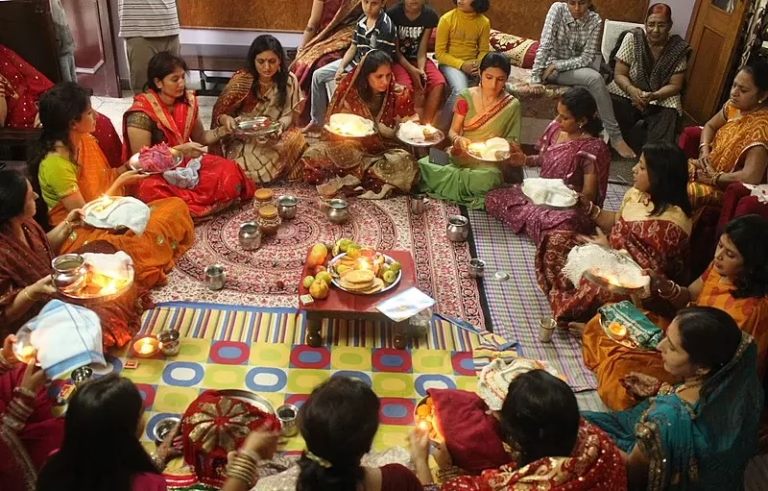
The most sacred part of the day. Women gather (or perform individually) to worship Goddess Parvati and prepare for moonrise.
Timing: After sunset but before moonrise (typically 6:00-8:00 PM depending on location)
Your Puja Steps:
First: Prepare the puja area Spread a clean cloth; Arrange all items on your thali
Second: Light the diya, incense sticks; Offer flowers and water to Goddess Parvati; Place roli-chawal as offering
Third: Chant prayers; Pray for your husband’s long life and family prosperity. You can use traditional mantras or pray in your own words.
Step 6: Katha Narration (Evening, Hours Before Moonrise)
What Happens:-
This is storytelling time! Women gather in groups to listen to the traditional Karwa Chauth Katha (story). If you’re alone, you can read it yourself or play an audio version.
The Story of Queen Veeravati (Listen or Read):-
Once upon a time, there lived a beautiful princess named Veeravati. She was the only sister to seven loving brothers who adored her dearly.
After marriage, she returned to her parents’ home for her first Karwa Chauth. She began her fast with devotion, but as hours passed, hunger and thirst weakened her. Her brothers couldn’t bear seeing their beloved sister suffer.
Unable to watch her in pain, her brothers devised a plan. They climbed a nearby tree with a mirror, held it up to reflect light, and told Veeravati that the moon had risen.
Believing them, Veeravati immediately broke her fast. But the moment she took the first bite, a messenger arrived with terrible news – her husband, the king, had suddenly fallen gravely ill.
Horrified and heartbroken, she rushed to her husband’s palace. On the way, she met Goddess Indrani (wife of Lord Indra) who revealed the truth: “Your brothers deceived you with good intentions, but breaking the fast before actual moonrise has brought this misfortune.”
Indrani gave her hope: “Observe Karwa Chauth properly for the next 12 months – fast on every Chaturthi with complete devotion and faith.”
Veeravati did exactly that. For an entire year, she observed fasts with unwavering dedication. Her prayers and devotion pleased Goddess Parvati, who blessed her. The king recovered completely, and they lived happily together.
The Lesson:- Patience, proper observance of rituals, and complete devotion bring blessings. Never break the fast until you see the actual moon!
Step 7: Moonrise – Breaking the Fast (8:00-10:00 PM)
What Happens:-
The moment you’ve been waiting for! The moon finally rises, and it’s time to complete the ritual and break your fast.
Check Moonrise Time: It varies by city (8:00-9:30 PM typically). Use moon-tracking apps or check online for your exact location.
The Ritual Sequence:-
Spot the Moon and wait until it’s clearly visible. Offer Arghya (water) to Chandra Dev with your karwa (pot) in hand.
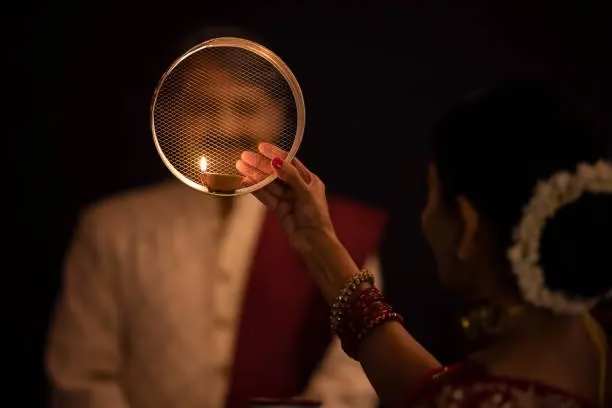
Look at the moon through a sieve or dupatta, then offer water as gratitude to the celestial being marking the end of your fast.
Next, look at your husband’s face through the same sieve, praying for his long life and well-being — a gesture symbolizing divine grace.
Seek his blessings (if comfortable), as he now becomes part of the ritual.
Finally, break your fast — your husband offers the first sip of water and a bite of food. Your Karwa Chauth fast is complete.
Now, it’s time to eat!
Begin gently — sip some water or juice, have fruits or light snacks. After 30–60 minutes, enjoy your regular dinner and celebrate the moment with your family.
Regional Variations: How Different States Celebrate
Punjab & Haryana:
➢ Strong community gatherings with women singing traditional songs
➢ Elaborate mehendi competitions
➢ Gift exchanges among female relatives
➢ Festive fairs and markets
Uttar Pradesh:
➢ Emphasis on mother-in-law preparing elaborate sargi
➢ Storytelling sessions during the day
➢ Large community pujas in neighborhoods
➢ Temples organize special ceremonies
Rajasthan:
➢ Women wear traditional poshak (Rajasthani dress)
➢ Folk songs and dance during evening wait
➢ Special sweets prepared for the occasion
➢ Royal families have unique celebration customs
Delhi NCR:
➢ Mix of traditional and modern celebrations
➢ Beauty parlors fully booked for the day
➢ Community clubs organize group celebrations
➢ Strong market for gifts and festive wear
Mumbai & other Metropolitan Cities:
➢ Working women celebrate at offices before heading home
➢ Shorter celebrations adapted to urban lifestyle
➢ Hotels and restaurants offer special Karwa Chauth packages
The Modern Perspective: Why Women Still Observe It
Traditional Reasons
- Praying for husband’s longevity and well-being
- Strengthening marital bonds
- Seeking blessings for family prosperity
- Following cultural and family traditions
Contemporary Motivations
- Personal Challenge: Testing self-discipline and willpower
- Cultural Connection: Maintaining ties to heritage and roots
- Family Bonding: Special time with mother-in-law and female relatives
- Community & Celebration: Being part of collective celebration and enjoying the festive atmosphere and dressing up
- Spiritual Practice: Personal devotion beyond societal expectations
The Feminist Lens: Personal Choice Matters
Here’s the honest truth:- Karwa Chauth generates debate in modern India. Some view it as patriarchal, others as personal devotion.
What’s important:- Whether to observe Karwa Chauth should always be a personal choice, not family pressure or social obligation. Many modern women celebrate it on their own terms:
- Some fast but expect equal gestures from husbands
- Others observe it as a spiritual practice, not just for their partner
- Many modify the fast (taking water, fruits) based on health needs
- Some skip it entirely without guilt
The Bottom Line: Traditions evolve, and that’s okay. What matters is your comfort, health, and consent.
Working Women's Survival Guide
Quick Office-Friendly Strategies
Energy Management:
➢ Take it slow – avoid high-energy tasks
➢ Schedule important meetings for morning
➢ Keep the fast confidential if workplace isn’t understanding
➢ Work from home if possible
Dealing with Colleagues:
➢ Brief colleagues so they understand if you seem tired
➢ Skip lunch meetings or social food situations
➢ Keep mints for dry mouth (if your fast allows)
➢ Plan to leave slightly early if possible
Health First:
➢ If you feel dizzy or unwell, break the fast
➢ Keep glucose or ORS handy for emergencies
➢ Don’t push yourself to prove anything
➢ Your health is more important than tradition
Quick Beauty Tips for Busy Women
Though we are no beautician, here are few tips to help you:
- Prep the night before: Organize clothes, jewelry, and puja items
- Dry shampoo: Quick fix if no time for hair wash
- Sheet masks: Quick skin refresher during lunch break
- Long-lasting makeup: Waterproof products that survive the day
- Comfortable shoes: Keep festive flats if planning to dash home
NRI Celebrations: Bridging Continents
Time Zone Challenges: Check local moon sighting apps for accurate timing
Community Solutions:
- Indian cultural associations organize group celebrations
- Community centers host evening gatherings
- Online communities coordinate virtual celebrations
- Temples provide resources and timing information
Creative Adaptations:
- Video calls with family in India during rituals
- Preparing sargi themselves or friends help out
- Teaching children about traditions through celebration
- Organizing potluck gatherings with other Indian families
Health & Wellness: What to keep in mind for safe and joyous fasting
Pre-Fast Preparation (Day Before):
• Hydrate well throughout the day
• Eat protein-rich, filling dinner
• Avoid very salty or spicy foods
• Get adequate sleep (7-8 hours minimum)
During the Fast
• Energy Conservation:
• Avoid strenuous physical activity
• Rest during afternoon hours
• Stay in cool, comfortable environment
• Practice deep breathing if feeling weak
Warning Signs to Watch:
• Severe dizziness or fainting feeling
• Extreme weakness or shakiness
• Severe headache or nausea
• Chest pain or breathing difficulty
When to Break the Fast: If you experience any severe symptoms, break the fast immediately. Your health is paramount. Traditions are beautiful, but not at the cost of wellbeing.
Quick fasting tips
Who Should Avoid Fasting?
- Pregnant or breastfeeding women
- People with diabetes or blood sugar issues
- Those with heart conditions or blood pressure problems
- Anyone on critical medications
- Those recovering from illness or surgery
Modified or Alternate Fasting Options:
- Taking water throughout the day
- Consuming fruits or milk
- Eating small light meals
- Observing shorter fast duration
How Partners Can Support?
Traditional Support:
- Ensure wife eats proper sargi meal
- Avoid eating in front of her during the day
- Help with household chores to reduce her effort
- Be present for evening moon sighting ritual
Modern Participation:
- Some husbands observe the fast together as solidarity
- Help with children so wife can rest
- Surprise with gifts or special gestures
- Express genuine appreciation for the effort
Express Your Love: Perfect Gifts for Karwa Chauth
The tradition of gift-giving during Karwa Chauth goes beyond material exchange—it’s a beautiful expression of love, appreciation, and strengthening bonds. These gestures acknowledge the devotion and care that make this festival special, creating memories that last far beyond the day itself.
For Wife (From Husband)
- Jewelry (bangles, earrings, mangalsutra)
- Designer clothes or accessories
- Flowers and chocolates
- Surprise romantic dinner
- Meaningful experiences together
For Friends Observing the Fast:
- Festive gift hampers
- Beauty and wellness products
- Traditional sweets
- Matching bangles or accessories
- Personalized festival gifts
For Mother-in-Law (From Daughter-in-Law):
- Traditional saree or dress material
- Gold or silver jewelry
- Personalized gift basket
- Spa or wellness package
- Heartfelt handwritten note
The Emotional Core: What Karwa Chauth Really Represents
Beyond the rituals, fasting, and festivities, Karwa Chauth represents something deeper. It’s a celebration of female solidarity, where women support each other through the fast, share stories, and celebrate together in a bond that transcends individual households. The sargi tradition creates a beautiful bridge of intergenerational bonding between mother-in-law and daughter-in-law, fostering understanding and closeness.
At its heart, this festival is about partnership appreciation—a dedicated day to acknowledge and celebrate marital relationships with intention and gratitude. It serves as a vehicle for cultural continuity, allowing families to pass down traditions to the next generation while adapting them to changing times. For many, it’s also a day of personal devotion, offering space for individual spiritual practice that holds unique meaning for each woman. Ultimately, Karwa Chauth creates moments of community celebration, where collective joy in shared cultural identity brings people together.
JF’s Concluding Ode
From sargi at dawn to the moon’s gentle rise,
Karwa Chauth brings tradition to life.
With mehendi and prayers under starlit skies,
Celebrating the bond between husband and wife,
Through fasting and faith, love’s devotion defies!
We can conclude that Karwa Chauth is a festival that continues to evolve while maintaining its core essence. Whether you observe it traditionally, adapt it to modern life, or simply appreciate its cultural significance, the festival represents the beautiful complexity of Indian traditions – rooted in the past yet flexible enough to embrace the present.
From the pre-dawn sargi prepared with love to the moonlit evening ritual, from the solidarity of women fasting together to the personal devotion each woman brings to the day, Karwa Chauth remains a uniquely meaningful celebration that honors relationships, tradition, and personal choice in equal measure.