
Ganesh Chaturthi 2026 falls on 14 September, here’s your complete guide to the festival’s date, muhurat, puja vidhi, visarjan, history, eco-friendly celebration tips, decorations, and festive recipes.
A Festival Where Devotion Meets Celebration
In September 2026, as the monsoon clouds begin to thin over Mumbai’s skyline, the streets will come alive with vibrant decorations, festive lights, and the joyful hum of celebration. Ganesh Chaturthi 2026 — falling on the fourth day of the bright fortnight in Bhadrapada.
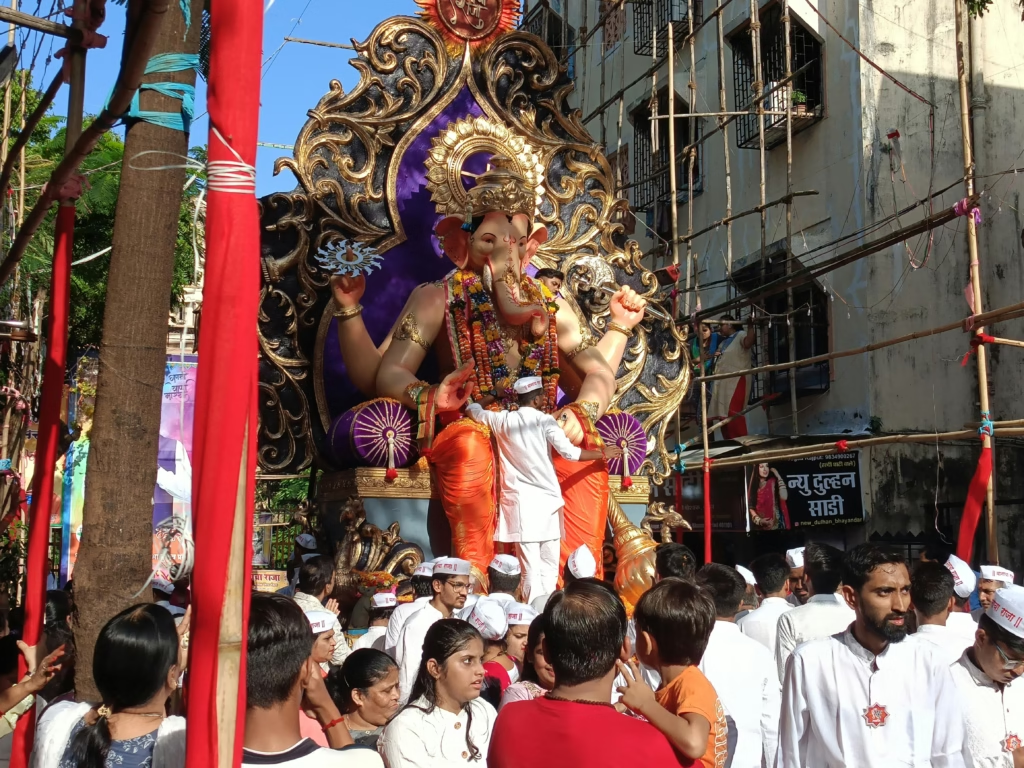
This vibrant Ganpati festival of Vinayaka Chaturthi marks the birth of Lord Ganesha, the remover of obstacles and bringer of prosperity. Across India, especially in Maharashtra, homes and public spaces come alive with colourful decorations, devotional music, and the fragrance of fresh flowers.
Quick View: See Full Indian Festivals Calendar 2026.
Ganesh Chaturthi 2026 Date & Muhurat
This year, Ganesh Chaturthi lands on Monday, 14th September 2026. The most sacred time for Ganesh Aagman is during the Madhyahna Muhurat, roughly late morning to early afternoon.
| Event | Date | Time (IST) |
|---|---|---|
| Ganesh Chaturthi 2026 | Monday, 14 September 2026 | – |
| Vinayaka Chaturthi Tithi Begins | Monday, 14 September 2026 | 07:06 AM |
| Vinayaka Chaturthi Tithi Ends | Tuesday, 15 September 2026 | 07:44 AM |
| Madhyahna Ganesha Puja Muhurat | Monday, 14 September 2026 | 11:02 AM – 01:31 PM |
| Anant Chaturdashi 2026 | Friday, 25 September 2026 | 11:24 AM (Sep 24) – 11:06 PM (Sep 25) |
Pro Tip for 2026:
If you are outside India, convert the Madhyahna Puja Muhurat to your local time zone. Since the festival is observed globally in places like Mauritius, USA, UK, and Australia, matching the Tithi and muhurat according to your region helps you stay aligned with tradition.
Why This Muhurat Matters
Think of a muhurat as the festival’s golden hour — when the sun, moon, and planets align to supercharge your prayers. For Ganesh Chaturthi, the midday Madhyahna period is believed to be when Lord Ganesha is most receptive to your welcome.
Madhyahna (midday period) is considered the sacred time for Ganesh Sthapana because it symbolizes clarity, energy, and removal of obstacles.
Following this timing is believed to enhance blessings, ensure the successful completion of rituals, and invite prosperity into your home.
Ganpati Visarjan 2026: Timing, Dates & Muhurat
Ganesh Visarjan marks the grand farewell to Lord Ganesha, symbolising the cycle of creation and dissolution, reminding us that all forms are temporary but the divine presence remains eternal.
In 2026, devotees can choose from several Visarjan days based on tradition, each with its own Choghadiya Muhurat for immersion.
Visarjan Type | Date (2026) | Auspicious Muhurat Timings |
|---|---|---|
1.5-Day | Tuesday, 15 September | Morning: Char Labh Amrit – 12:16 PM – 1:49 PM Afternoon: Shubh – 3:21 PM – 4:54 PM Evening: Labh – 7:54 PM – 9:21 PM Night: Shubh, Amrit, Chara- 10:49 PM – 3:11 AM (Sep 16) |
3-Day | Wednesday, 16 September | Morning: Shubh- 10:43 AM – 12:16 PM Afternoon: Chara, Labh- 3:20 PM – 6:25 PM Evening: Shubh, Amrita, Chara — 7:53 PM – 12:16 AM (Sep 17) Early Morning: Labh- 3:11 AM – 4:39 AM (Sep 17) Morning: Labh, Amrit- 6:06 AM – 9:11 AM |
5-Day | Friday, 18 September | Morning: Chara, Labh, Amrit – 6:07 AM – 10:43 AM Afternoon: Shubh – 12:15 PM – 1:47 PM Afternoon: Chara — 4:51 PM – 6:23 PM Night: Labh- 9:19 PM – 10:47 PM Night: Shubh, Amrit, Chara — 12:15 AM – 4:40 AM (Sep 19) |
7-Day | Sunday, 20 September | Morning: Char, Labh, Amrit – 7:40 AM – 12:14 PM Afternoon: Shubh – 1:46 PM – 3:17 PM Evening: Shubh, Amrit, Chara — 6:20 PM – 10:46 PM Night: Labh- 1:43 AM – 3:12 AM (Sep 21) Early Morning: Shubh- 4:40 AM – 6:09 AM (Sep 21) |
11-Day | Friday, 25 September | Morning: Chara, Labh, Amrit- 6:11 AM – 10:42 AM Afternoon: Shubh- 12:13 PM – 1:43 PM Afternoon: Chara — 4:44 PM – 6:14 PM Night: Labh- 9:14 PM – 10:43 PM Night: Shubh, Amrit, Chara — 12:13 AM – 4:42 AM (Sep 26) Tithi: Chaturdashi begins 11:18 PM (Sep 24) and ends 11:06 PM (Sep 25) |
Anant Chaturdashi 2026: Visarjan Date
The festival concludes with Anant Chaturdashi, which in 2026 falls on Thursday, 24 September 2026. On this day, devotees immerse Lord Ganesha idols in rivers, lakes, or artificial ponds, bidding farewell with chants of: Ganpati Bappa Morya, Pudhchya Varshi Lavkar Yaa!
Central Pollution Control Board → Idol Immersion Guidelines
Ganesh Sthapna Puja Vidhi (Brief Overview)
Learn how to do
Ganesh Sthapana at Home
- Performing Ganesh Chaturthi puja during the Madhyahna Muhurat is considered most auspicious. Here’s the brief step-by-step ritual
- The idol is placed facing east or west, with northeast being the most preferred direction.
- The puja space is cleansed and purified with Gangajal and cow urine (Gaumutra), then beautifully decorated with flowers, rangoli, and sacred symbols like the swastik made from rice and turmeric.
- Essential items such as haldi (turmeric), kankon (vermilion), durva grass, hibiscus flowers, coconut, jaggery, and fruits are used to honor Lord Ganesha.
👉 For a step-by-step process of setting up the idol at home and to ensure every ritual is performed correctly follow our Ganesh Chaturthi sthapna vidhi guide.
Ganesh Chaturthi 2026 Festival Calendar & Day-Wise Rituals
Ganesh Chaturthi is celebrated for different durations from 1.5 days to 11 days but the traditional form is a 10-day festival ending with Anant Chaturdashi. Here’s the day-wise schedule for the full celebration in 2026:
| Day | Date (2026) | Ritual Highlights | Significance |
|---|---|---|---|
| Day 1 – Ganesh Sthapana & Pranapratishtha | 14 September (Monday) | Idol installation during Madhyahna Muhurat, Pranapratishtha mantras, first Modak offering | Inviting Lord Ganesha’s divine presence into the home or pandal |
| Day 2 – Riddhi-Siddhi Puja | 15 September | Offer hibiscus flowers, jaggery, and coconut; chant 108 names of Ganesha | Blessings for prosperity & harmony |
| Day 3 – Durva Grass Puja | 16 September | Offer 21 strands of durva grass; recite Ganapati Atharvashirsha | Symbol of humility and longevity |
| Day 4 – Bhog of Ladoo Varieties | 17 September | Offer besan or coconut ladoos | Sweetens life’s journey |
| Day 5 – Panchamrit Abhishek | 18 September | Bathe idol with milk, curd, ghee, honey, sugar | Purification and renewal |
| Day 6 – Cultural Night | 19 September | Organise bhajan/kirtan or classical dance performance | Community bonding & devotion |
| Day 7 – Annadan Seva | 20 September | Distribute food to the needy | Sharing blessings with others |
| Day 8 – Siddhi Vinayak Puja | 21 September | Offer red flowers and sweets | For fulfilment of desires |
| Day 9 – Gauri-Ganpati Puja | 22 September | Special worship for Goddess Gauri | Family well-being |
| Day 10 – Anant Chaturdashi & Visarjan | 25 September (Friday) | Final aarti, 21 Modaks, immersion processions | Farewell to Lord Ganesha, seeking his return next year |
👉 From Mumbai’s Lalbaugcha Raja to Pune’s Dagdusheth, discover The Famous Ganesh pandals in India.
The Legend Behind the Festival
Birth of Lord Ganesha
Hindu mythology says Goddess Parvati shaped Ganesha from sandalwood paste to guard her chambers. When he blocked Lord Shiva’s entry, an angry Shiva beheaded him, only to later revive him with an elephant’s head. Since then, Ganesha is worshipped first in every ceremony as the remover of obstacles.
The Public Celebration Movement
While Ganesh Chaturthi was traditionally celebrated in homes and temples, its transformation into a grand public festival came in the late 19th century. Lokmanya Bal Gangadhar Tilak, a prominent freedom fighter, recognised the festival’s potential to unite Indians during the struggle against British rule. In 1893, he encouraged large community gatherings, public processions, music, and cultural programs under the banner of Ganesh Chaturthi.
Over time, Vinayaka Chaturthi evolved into a grand community celebration, revived by Lokmanya Tilak. It became a silent yet powerful form of resistance. Today, the spirit of those gatherings lives on in the massive mandals, elaborate pandals, and street processions that define Ganesh Chaturthi not just in Mumbai or Pune but across India.
👉 Dive deeper into the origins and legends in our History of Ganesh Chaturthi.
Spiritual & Scientific Significance of Ganesh Chaturthi
Spiritual:
Ganesha’s elephant head symbolizes intellect and foresight.
His broken tusk teaches sacrifice for knowledge (writing the Mahabharata).
Visarjan signifies detachment — all material things are temporary.
Scientific:
Clay idols, when eco-friendly, dissolve and enrich the soil with natural minerals (though harmful paints can cause pollution if not avoided).
Community gatherings and processions stimulate social bonding, which studies link to reduced stress and better mental health.
Chanting mantras like Om Gan Ganapataye Namah can help slow breathing and lower heart rate, promoting relaxation.
Ganesh Chaturthi Across India (State-wise Highlights)
| State | Celebration Highlights |
|---|---|
| Maharashtra | Lalbaugcha Raja, giant pandals, community feasts. |
| Goa | Matoli decorations with fruits, medicinal plants. |
| Karnataka | Gowri-Ganesha festival pairing. |
| Tamil Nadu | Pillaiyar Chaturthi with elaborate kolams. |
| Andhra Pradesh & Telangana | Street processions with cultural performances. |
| Odisha | Known as Ganesh Puja, popular in schools and colleges. |
Eco-Friendly Ganesh Chaturthi 2026
Why It Matters:
Plaster of Paris (PoP) idols may look beautiful but take months to dissolve, releasing harmful chemicals into water bodies and damaging aquatic ecosystems. Switching to eco-friendly idols is both an environmental necessity and a way to return to traditional, sustainable practices.
Eco-Ideas for a Greener Celebration:
Clay Idols – Naturally disintegrate in water without polluting.
Seed Idols – Contain plant seeds that grow after visarjan, symbolising new beginnings.
Paper-Mâché Idols – Lightweight, biodegradable, and easy to decorate.
Natural Colours – Use turmeric, red soil, hibiscus powder, or other plant-based dyes for safe, vibrant decorations.
Many are now opting for eco-friendly Ganesh idols in sarvajanik mandals too, to reduce water pollution during the Anant Chaturdashi visarjan
👉 Make a positive environmental impact this year with beautiful and sustainable Eco-friendly Ganesh idol ideas
Ganesh Chaturthi Decoration Ideas
Traditional Floral Theme – Marigold & jasmine garlands.
Temple Replica – A miniature shrine-style backdrop using wood or cardboard for a sacred, temple-like setting
Nature Theme – Decorate with bamboo frames, banana leaves, and natural elements
LED & Fairy Lights – For a warm festive glow.
DIY Paper Torans – Make colourful, eco-friendly door hangings from recycled paper to welcome guests.
Ganesh Chaturthi Foods & Sweet Offerings
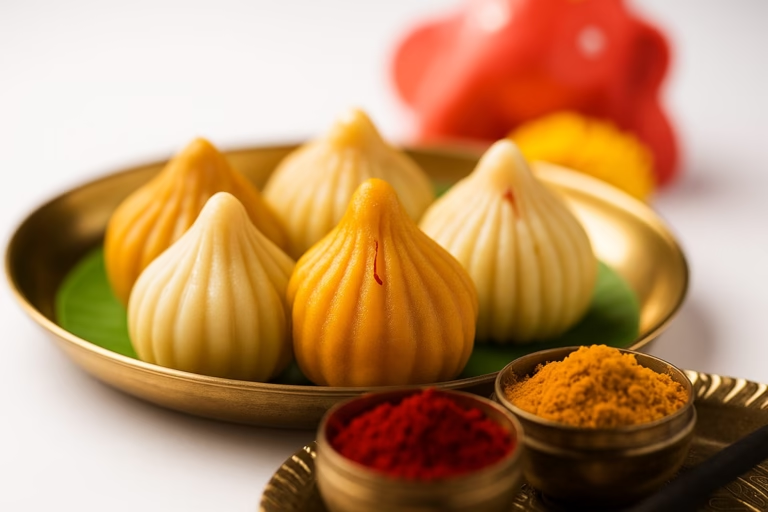
Modak – The signature sweet of Ganesh Chaturthi, offered as naivedya to Lord Ganesha. Traditionally steamed (Ukadiche Modak) or fried, with modern fusion varieties like chocolate and dry fruit.
Puran Poli – Soft, lentil-stuffed sweet flatbread made with jaggery and cardamom, served with ghee.
Karanji / Nevri – Crisp, deep-fried pastry stuffed with sweet coconut and jaggery filling, popular in Maharashtra and Goa.
Ladoo Varieties – Festive favourites such as besan ladoo, rava ladoo, and nariyal ladoo, made with wholesome ingredients and aromatic spices
👉 Modak are considered as Ganpati’s favourite sweet — explore Significance of Modak in Ganesh Chaturthi.
Ganesh Chaturthi FAQs: Dates, Muhurat, Puja, and Traditions
What is the exact date and time of Ganesh Chaturthi in 2026?
Ganesh Chaturthi 2026 will be celebrated on Monday, 14 September 2026. The festival marks the birth of Lord Ganesha, the remover of obstacles and god of wisdom.
What are the best muhurat (auspicious timings) to perform Ganesh Puja in 2026?
The Madhyahna Muhurat, from 11:02 AM to 1:31 PM IST on 14th September 2026, is considered the most auspicious time to install Lord Ganesha’s idol.
How many days is Ganesh Chaturthi celebrated?
The festival can be celebrated from 1.5 days up to 11 days traditionally, with the popular duration being 10 days ending on Anant Chaturdashi.
What are the different types of Ganesh Visarjan days in 2026?
Devotees can choose from 1.5-day, 3-day, 5-day, 7-day, or 11-day Visarjan (immersion) days based on tradition and preference.
Why is Ganesh Visarjan important?
Visarjan symbolizes the cycle of creation and dissolution, teaching detachment by reminding us that physical forms are temporary but the divine presence is eternal.
How can I celebrate Ganesh Chaturthi in an eco-friendly way?
Use clay or seed idols, natural colors, biodegradable decorations, and avoid Plaster of Paris (PoP) idols to reduce environmental pollution.
What are some traditional foods offered during Ganesh Chaturthi?
Popular offerings include Modak (steamed or fried), Puran Poli, Karanji/Nevri, and various types of ladoos.
What is the significance of Ganesh Chaturthi?
It celebrates the birth of Lord Ganesha, the remover of obstacles and god of new beginnings, wisdom, and prosperity.