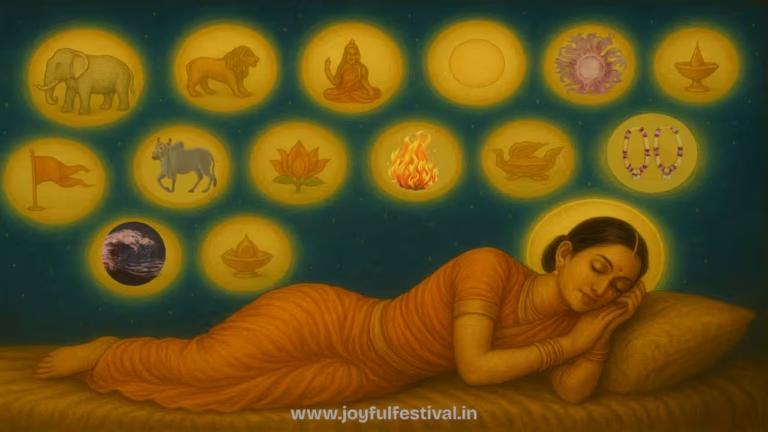
Note: This is an AI-generated visual. Some elements may not exactly match traditional Jain depictions of the 14 dreams.
Introduction: The Night That Changed History
More than 2,600 years ago, Queen Trishala, the wife of King Siddhartha of the Ikshvaku dynasty, had a series of divine visions famously known as the 14 sapne (14 dreams) on a serene night. These were not ordinary dreams — they were cosmic symbols that foretold the birth of an enlightened soul: Lord Mahavir, the 24th Tirthankara of Jainism. Jain scholars and astrologers interpreted these dreams as omens of spiritual greatness, purity, and world-transcending karma.
These dreams form a crucial part of Jain religious teachings and are often narrated during festivals like Paryushan and Mahavir Jayanti to remind followers of the Tirthankara’s virtues.
→ Mata Trishala’s dreams are described in ancient Jain scriptures
Trishala Mata’s 14 Dreams (14 Sapne) and Their Meanings
| # | Dream | Symbolism |
|---|---|---|
| 1 | Elephant | Signifies strength, mental clarity, and royal power. A strong soul is arriving. |
| 2 | Bull | Symbol of dharma (righteousness), discipline, and leadership in spiritual pursuits. |
| 3 | Lion | Fearlessness, authority, and sovereignty — a future spiritual conqueror. |
| 4 | Lakshmi (Goddess) | Indicates fortune, spiritual wealth, and divine presence. |
| 5 | Garland of Flowers | Represents purity, eternal beauty, and devotional recognition. |
| 6 | Full Moon | Calmness, peace, clarity of mind, and spiritual enlightenment. |
| 7 | Sun | Knowledge, awakening of truth, and destruction of ignorance. |
| 8 | Flag | Victory of truth and dharma, global influence of virtuous teachings. |
| 9 | Golden Vase | Prosperity, fertility, and divine perfection. A vessel of supreme soul. |
| 10 | Lotus Lake | Detachment, inner purity, and tranquility amidst worldly distractions. |
| 11 | Ocean | Boundless knowledge, depth of spiritual insight, and timelessness. |
| 12 | Celestial Plane (Flying Throne) | Elevation to divine realms; supreme soul with high destiny. |
| 13 | Heap of Jewels | Infinite virtues, unmatched character, and spiritual richness. |
| 14 | Smokeless Fire | Pure energy, transformation, and passion without violence. A soul free of karmic smoke. |
Why These Dreams Matter in Jainism?
In Jain tradition, the birth of a Tirthankara is never ordinary — it’s guided by cosmic forces. Mata Trishala’s dreams are not just myths but spiritual archetypes, representing the soul’s highest potential. These signs are a confirmation that she was carrying a Kevali — one who would attain Keval Gyan (infinite knowledge) and show the path of liberation (Moksh) to the world.
These dreams are often used in sermons and Jain education to convey ethical values and metaphysical insight, especially during Paryushan, Samvatsari, and Mahavir Janma Kalyanak.
To explore more about this beautiful Jain tradition, read our guide:
→ Paryushan Parv & Samvatsari 2026.
Clear or Blurred? The Hidden Clue to the Soul’s Destiny
In Jain tradition, the clarity of Trishala Mata’s 14 dreams held a profound secret.
If the dreams are crystal-clear, radiant, and vivid, the soul to be born is that of a Tirthankara — a spiritual teacher who has destroyed all karmic bonds.
If the dreams are faint, cloudy, or indistinct, the child will be a Chakravarti a universal monarch who will rule the world with power and justice, but still remain within the karmic cycle.
Because Queen Trishala saw these dreams in sharp, luminous detail, it was instantly recognized the soul in her womb as not a king, but a savior — someone who would walk the path of renunciation, self-realization, and liberation.
This dual possibility either a Tirthankar or a Chakravarti, it reflects a deeper Jain truth:
“The same karmic power can either rule the world or transcend it, depending on the soul’s purity.“
Symbolism Through Jain Eyes
These dreams reflect the Jain worldview:
The world is filled with karmic energy.
Souls who purify themselves (like Tirthankaras) radiate cosmic signs.
Dreams are considered spiritual messages, not illusions — especially during the pregnancy of a Tirthankara’s mother.
In this case, all 14 symbols are associated with detachment, non-violence, knowledge, and divine power — the four core traits of Mahavir Swami.
Connection with Paryushan & Samvatsari
The story of Trishala Mata’s dreams is especially relevant during Paryushan Parv — a period of introspection, penance, and spiritual cleansing. Just as these dreams foretold a soul that would transcend karma, Paryushan encourages every Jain to overcome attachment and ego.
Conclusion: More Than a Dream- A Message for All of Us
The 14 auspicious dreams of Mata Trishala are not just sacred Jain symbols — they are invitations. Each dream asks us to embrace purity, truth, wisdom, and fearlessness in our own lives. These ancient visions remind us that great souls do not appear suddenly — the universe prepares the world through signs of light, clarity, and cosmic truth.
Want to explore more upcoming Jain and Indian festivals?
Who was Trishala Mata in Jainism?
Trishala was the mother of Lord Mahavir, the 24th Tirthankara. She experienced 14 divine dreams during her pregnancy that foretold his greatness.
What do the 14 dreams of Trishala Mata signify?
Each dream symbolizes a spiritual quality — like purity, knowledge, fearlessness, or dharma — that Lord Mahavir would possess.
Are these dreams mentioned in Jain scriptures?
Yes, they are detailed in Jain Agamas and are recited during major festivals like Mahavir Jayanti and Paryushan.
Why are these dreams important today?
They carry timeless messages about ethics, enlightenment, and the path to liberation which are the core Jain values.